
Happily serving our community since 2006!
Massage is not just about relaxation. Although massage therapy can be a great way to unwind from our stressful, fast-paced lives, there is a lot more to it. It is actually a therapeutic treatment, performed by qualified professionals who have your best interests at heart—and in hand.
Our staff is ready to guide you to optimum health and improved well being. We work together with you as a partner to determine the best care for your needs and wellness goals. By listening to your needs and answering any questions you may have about your body, we can better support your quest to a better mind, body, and spirit.
Bodylogic ensures a safe, private environment for clients to relax and focus on their treatments. We offer a variety of massage therapy services, including Therapeutic Massage, Deep Tissue Massage, Cranial Sacral, Myofascial Mobilization, Myoskeletal, Swedish, Neural Modulation, Cupping, Scraping, Taping, Passive Stretching, Nerve Gliding , Movement Re-education, and more.
Areas of focus often include TMJ, Shoulders, Head, Neck, Diaphragm, Lumbar, Scaral Torsion, Hips, Knee, Ankle and Plantar Fascia. We can focus on Migraines, Posture, Pain Syndromes and many other issues.
TMJ Dysfunction is an area of common concern and we bring a whole body approach. Often the neck and shoulders are the real culprits but sometimes teaching you how to self treat muscles in the mouth is all it takes to get better and more lasting relief. The same holds for recurrent Tendonitis or tendonosis issues.
Education is key and we can help you unlock many issues with a deeper understanding.
Scroll down to learn about our available massage services. We're happy to discuss your needs when you call for an appointment and help you decide which services are right for your body.
Techniques
Advanced Myofascial Release ‘CAMT’
Myoskeletal Alignment Techniques ‘MAT’
Often considered medical or orthopedic massage, bring to the table many proven principles approaches. PNF, trigger point release, fascial following, nerve gliding, muscle spindle cell and golgi tendon techniques to stimulate the stretch reflex in muscles thereby "tricking" the tissues into realignment and resetting the muscle to a fully rested state.
Osteopathic theory proposes that fascia, muscle and other soft tissue can become restricted due to overuse or trauma or inactivity. This can result in pain, tension, decreased blood flow and nerve compression.
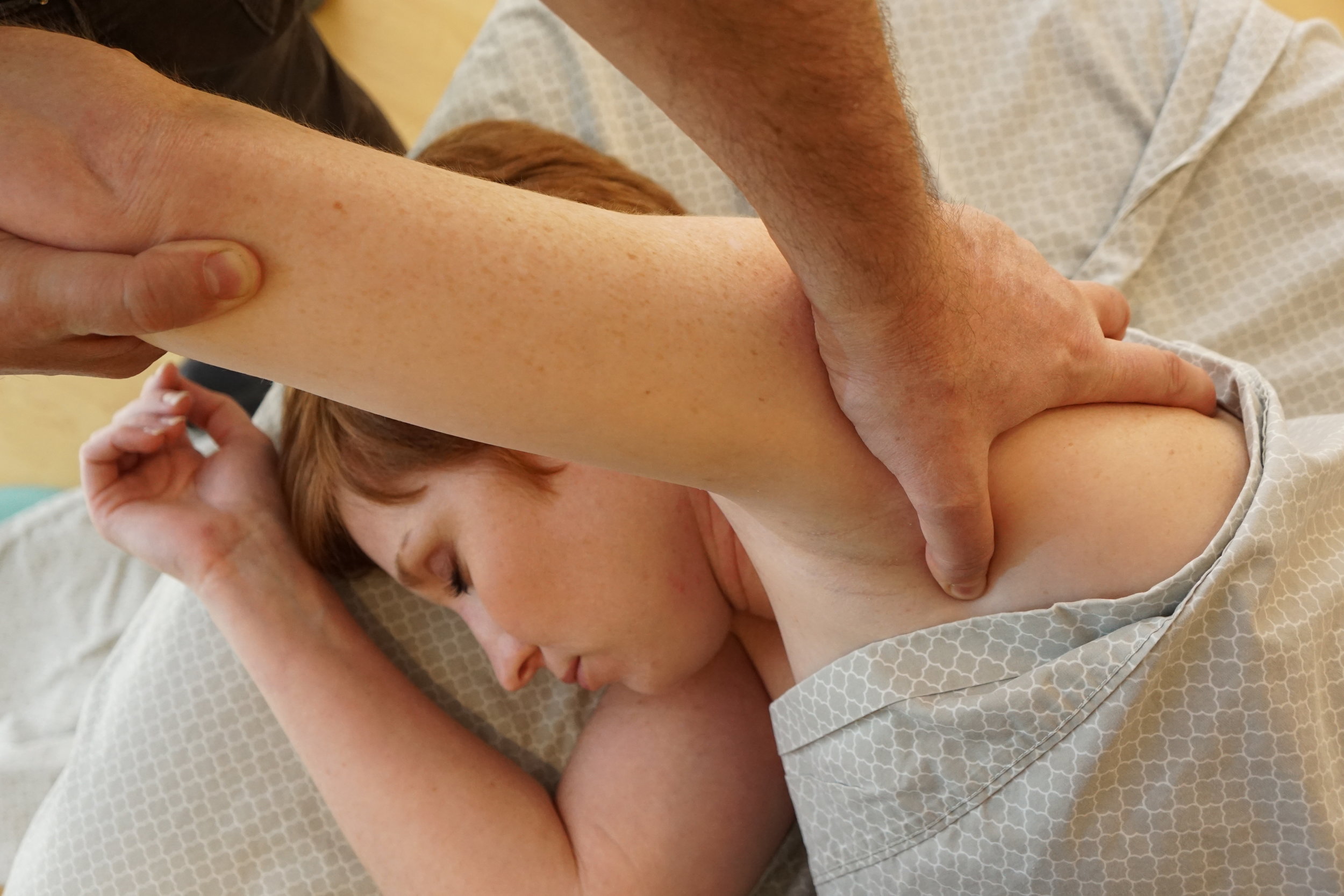
Therapists may use knuckles, elbows or other tools to slowly stretch the fascia and mobilize adhered tissues. The practitioner moves slowly through the layers of the fascia until the deep tissues are reached. As Ida Rolf, biochemist known for structural integration, says: "Put the tissue where it should be and then ask for movement."
Sessions are usually very relaxing, although specific areas may be quite intense.
Communicate with your therapist. More pressure is not always better.
Lymphatic Drainage
This wide group of techniques is based on helping the body to process lymph and return it to the bloodstream. Lymphatic vessicules are very delicate and require extremely light touch. All of our therapists are trained in lymphatic techniques and principles, but we rarely offer an entire session devoted solely to lymph drainage because it is easy to overwork these structures. Although the sessions are built on extremely light and delicate touch we can only move so much fluid in one hour.
Often, “Dry Brushing” as consistent self care routine is a superior method of attaining lymph movement and support. We are happy to provide education on this self care method.
Integrative
This approach allows each Therapist to shine in their own training, understanding and abilities. Feel free to ask each therapist how they integrate all of these multiple modalities into your session so you get the most from your session without worrying about specific techniques and limitations.
Many times, bringing multiple styles together is superior to one specific treatment.
Deep Tissue
This term often is used to mean ‘More Pressure’ but true deep tissue involves a greater understanding of timing, anatomy and pacing. Many styles fit under this umbrella term and we excel in these methods.
Fascial, Myofascial and Neuromuscular
Fascia is the most common tissue in our body.. with lots of current scientific revelations. Fascia orients our muscle cells, makes up tendons ligaments, and does much more. We are trained in the techniques that prioritize you fascia.
Scar Work
More than just making scars look better, focused work on the deeper aspects can help end the burning and itching and pulling sensations caused by fascial neglect.
Ankles
So overlooked, but so important. We always find it kind of amazing what thorough focused work on the ankles can do for feet, knees, hips and even TMJ dysfunction.
Tendonitis
R.I.C.E (Rest, Ice. Compression. Elevation) has been disavowed by Dr Gabe Mirkin the creator of the protocol…10 years ago! for lack of good scientific findings. in fact H.E.A.T. is now a preferred protocol. Dr. Jill Cook and her research provides us with 50 years of updated information. Firstly, we do not want to immobilize the tendon, and we do not want to compress the site of injury.
Migraines
Relieving the tension headache triggers that often begin a full blown migraine can really help reduce the frequency and duration of you particular migraine situation.
Cupping
Negative pressure gliding cups pull fluids up into superficial layers of the epidermis to help the body move and heal. Extravasion of blood cells stuck in capillary beds allow improved venous return and signal the body to heal.
Scraping
Using the principles and tools of “IASTM” Instrument Aided Soft Tissue Manipulation, also known as Graston Technique, or ‘Gua Sha’ in the traditional Chinese methodologies, we can break up superficial adhesion and restrictions. with light strokes using a variety of tools and scrapers.
Taping
Rock Tape, KT tape and other uses of stretchy tape to help send messages back to the brain for improved movement and counter-irritation techniques.
Vibration
Much preferred to a ‘massage gun’ vibration type mechanical stimulation has a better scientific track record and reduced chance of injury.
Healing Touch, Reiki, and Energetic Therapies
we do offer these types of treatments usually as an integrated component to our sessions, but with a specific request we can set you up with the therapists who specialize.